

📖 THE BEAD LIBRARY 🌍More Than a Bead: Africa, Trade & the Stories Beads Carry
Bead Library 8/11/2026
I have a confession.
Give me a table covered in old, unusual, colorful beads and I can disappear for a very long time. 😊
I want to pick them up. Turn them over. Look at the wear around the holes. Wonder how they were made, where they came from, how old they might be—and how many hands may have held them before mine.
This week I have an especially good reason to wander back down that particular rabbit hole.
The Rocky Mountain Bead Society Mini Challenge is inspired by Africa, and it immediately brought me back to a subject I've enjoyed learning about before: African beadmaking, trade beads, and the remarkable history connected to these tiny objects.
Once you begin looking into that history, you quickly discover something.
A bead is almost never just a bead.
🌿 Before There Were “Trade Beads”
When we hear the words African trade beads, it's easy to picture colorful glass beads arriving on ships from Europe.
But that's only one chapter of a much longer story.
Africa had rich traditions of personal adornment and beadmaking long before European trade beads entered the picture. Archaeological discoveries in South Africa include pierced shells used for adornment tens of thousands of years ago.
Across an enormous continent filled with many different peoples and cultures, beads and ornaments have been created from shell, stone, clay, bone, coral, metal, glass and other materials.
And depending upon the community, place and time, beads could mean far more than decoration.
They could be connected to identity.
Status.
Relationships.
Spiritual beliefs.
Community.
Celebration.
And tradition.
It's also important to remember that there isn't one single thing called “African beadwork.”
Africa is extraordinarily culturally diverse, and its bead traditions differ from one region and community to another.
That's part of what makes learning about them so fascinating.
🌍 Then the Beads Began to Travel
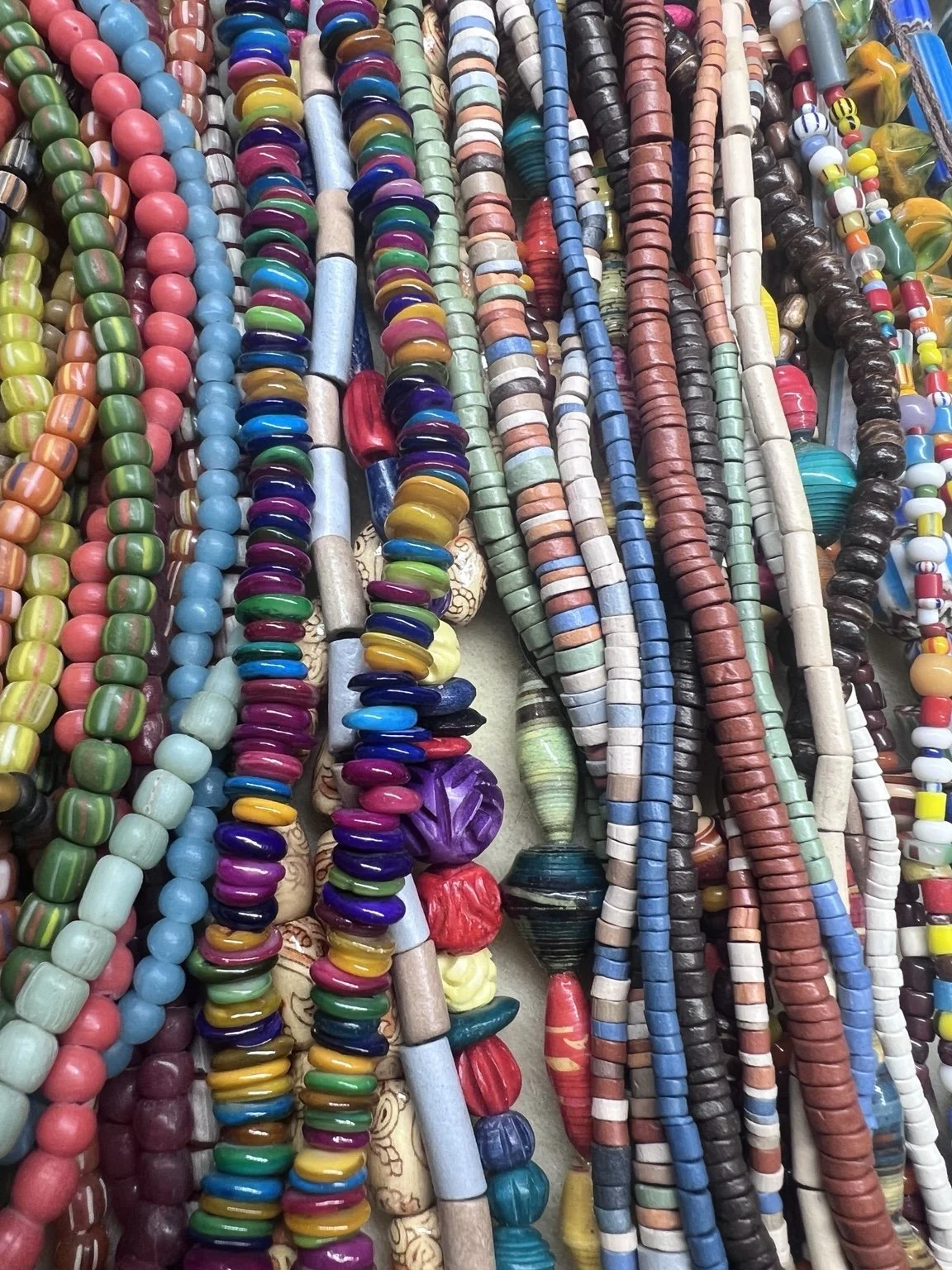
Beads may be tiny, but they turned out to be wonderful travelers.
They're small.
They're durable.
They're relatively easy to transport.
And humans have valued beautiful and unusual materials for a very long time.
Long-distance trade connected African societies with other parts of the world centuries before modern European colonial expansion. Archaeological study of glass beads has even helped researchers trace trade networks connecting eastern and southern Africa with the wider Indian Ocean world.
Later, European-made glass beads became an increasingly important part of global commerce.
Venice—and particularly Murano—became one of the great centers of glass-bead production, manufacturing extraordinary varieties of beads that traveled around the world.
Other European glassmaking centers eventually participated as well.
This is where the term trade bead becomes interesting.
Many beads we casually refer to today as African trade beads weren't necessarily manufactured in Africa. Some were made in Europe and traveled into African markets, where they entered existing systems of commerce, adornment and artistic expression.
But African artisans were—and remain—beadmakers themselves.
Communities including Krobo beadmakers in Ghana developed distinctive traditions of creating beautiful glass beads, including beads produced from recycled glass.
So this isn't simply a story about Europeans bringing beads to Africa.
It's a story of movement, exchange, craftsmanship, adaptation and people giving materials meaning.
❤️ The Presentation That Made Me Want to Know More
My own interest in African beads and beadwork became much more personal after hearing jewelry artist, author and teacher Melody MacDuffee speak during a presentation last May.
I had seen African beads before, of course.
I had admired their colors, patterns, textures and wonderfully imperfect character.
But listening to Melody tell the stories behind the beads—and, more importantly, the people making them—made me want to know more.
Melody is the co-founder of Soul of Somanya, a nonprofit whose story began with a rather extraordinary email.
In 2007, Melody was contacted on behalf of bead artisans in the Krobo region of Ghana who asked if she would come and teach additional jewelry-making techniques.
These were already skilled artisans creating the distinctive recycled-glass beads for which the region is known.
Melody traveled to Ghana to share what she knew—and to learn from them as well.
What began as a teaching trip eventually grew into Soul of Somanya, founded by Melody and Ghanaian artisan Arkuh Bernard Tettey, with a mission centered on creating dependable, living-wage handcraft employment and economic opportunities.
There was something about hearing Melody tell those stories in person that stayed with me.
Suddenly the beads weren't simply beautiful objects.
There were makers behind them.
Families.
Communities.
Skills passed from one generation to another.
And a contemporary story that is still being written today.
I think that's when my curiosity really took hold.
Instead of only looking at a bead and wondering,
What could I make with this?
I began wondering:
Where did this come from?
Who made it?
How was it made?
What story did it already carry before it ever reached my bead mat?
That presentation deepened my interest in African beads and my desire to learn more about the cultures, makers and history surrounding them.
And I'm still learning.
Maybe that's one of the things I love most about beads.
The more you learn about them, the bigger their world becomes. 🌍❤️
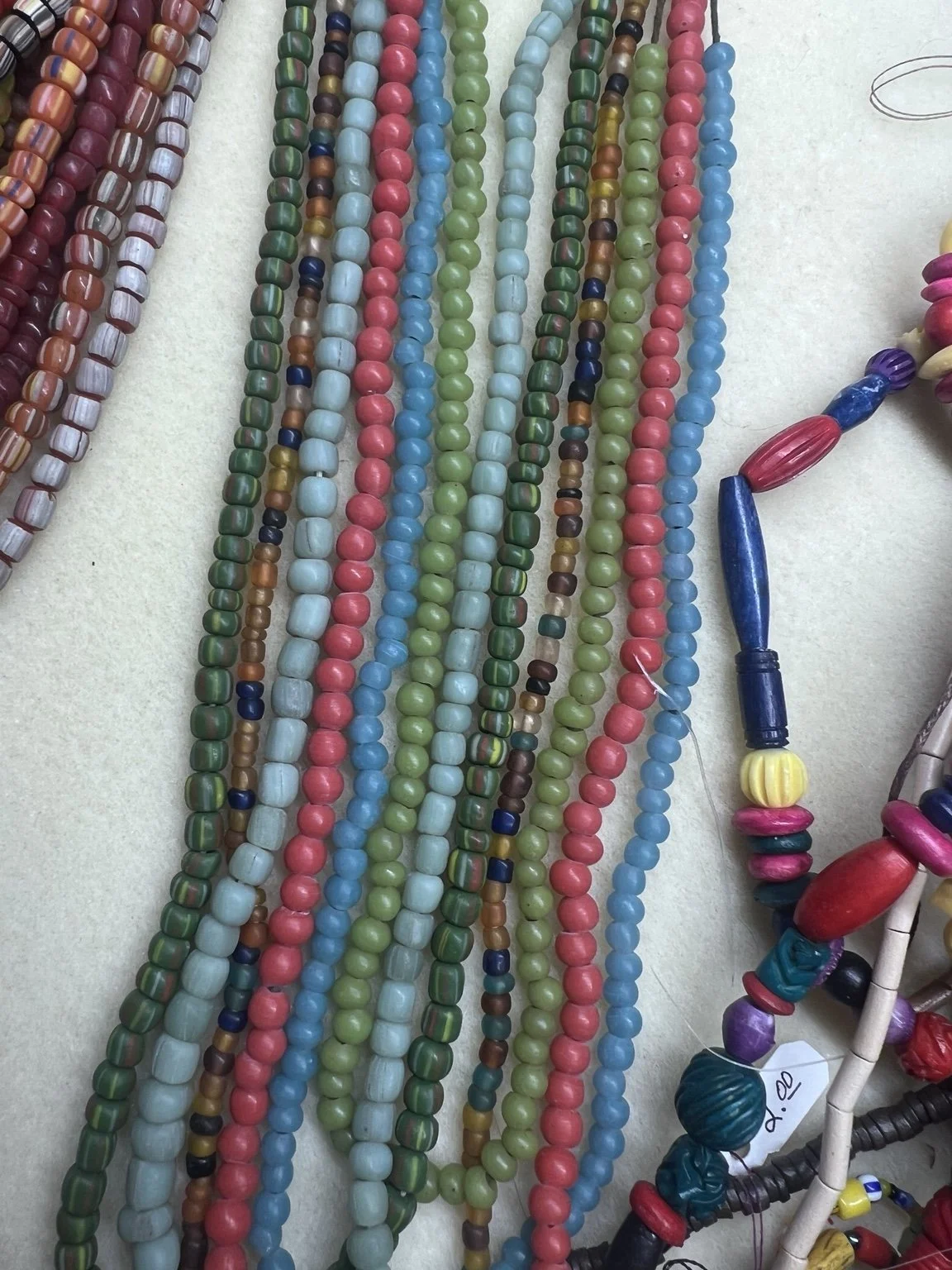
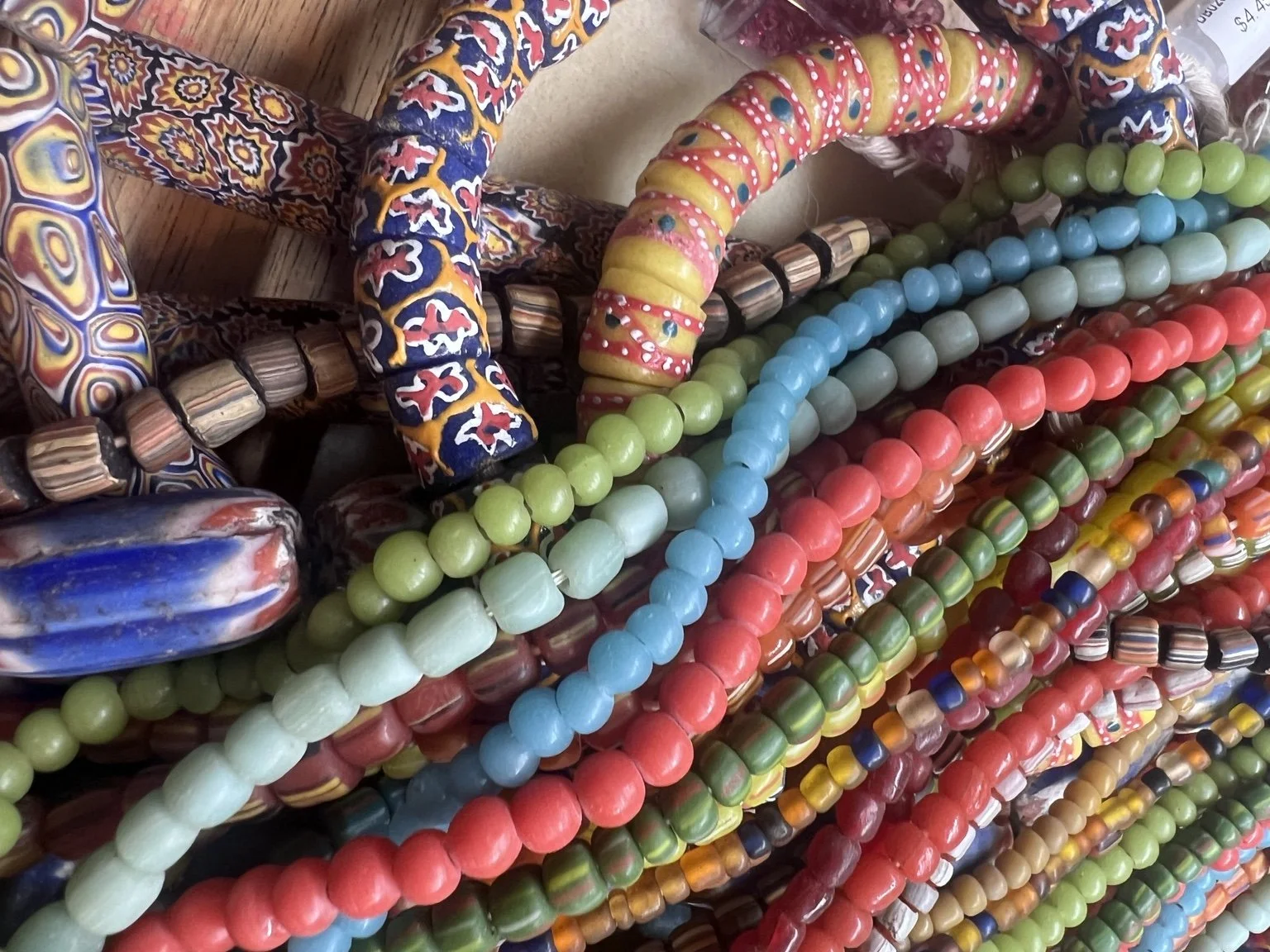
Part of my own bead collection. Some have known origins; others still have stories I'm learning to uncover.
❤️ Not Every Part of the Story Is Beautiful
As much as I love the artistry and history surrounding beads, we can't talk honestly about historic global trade without acknowledging that some parts of that history are difficult.
As European commercial expansion in Africa grew, trade became entangled with colonialism, exploitation and the transatlantic slave trade.
Beads were among many commodities that circulated within those systems.
I don't think acknowledging that history takes anything away from appreciating the artistry of these objects.
If anything, it reminds us that the materials we hold can have complicated histories.
Learning about those histories gives us an opportunity to approach them with greater understanding and respect.
🧵 When Beads Become a Language
Something else fascinates me.
The story doesn't end when a bead reaches its destination.
That's where another story begins.
Artists incorporated glass beads into existing traditions and transformed them through their own designs, techniques and cultural meanings.
In different African communities, beadwork has been used to communicate aspects of identity, social standing, relationships, age, ceremony and belonging.
And although the traditions are very different, I think bead artists today can understand something about that instinct.
We still give beads meaning.
We choose a color because it reminds us of someone.
We save a special bead because it came from a friend.
We incorporate something old into something new because we can't bear to let it disappear.
We make jewelry to celebrate births, weddings, friendships, memories and milestones.
Sometimes we simply choose a bead because something about it speaks to us.
The materials and traditions may be different.
But that very human desire to tell stories through the things we make continues.
🔎 But Is It Really an African Trade Bead?
This may be one of my favorite lessons from learning about old beads:
Be careful what you claim to know. 😂
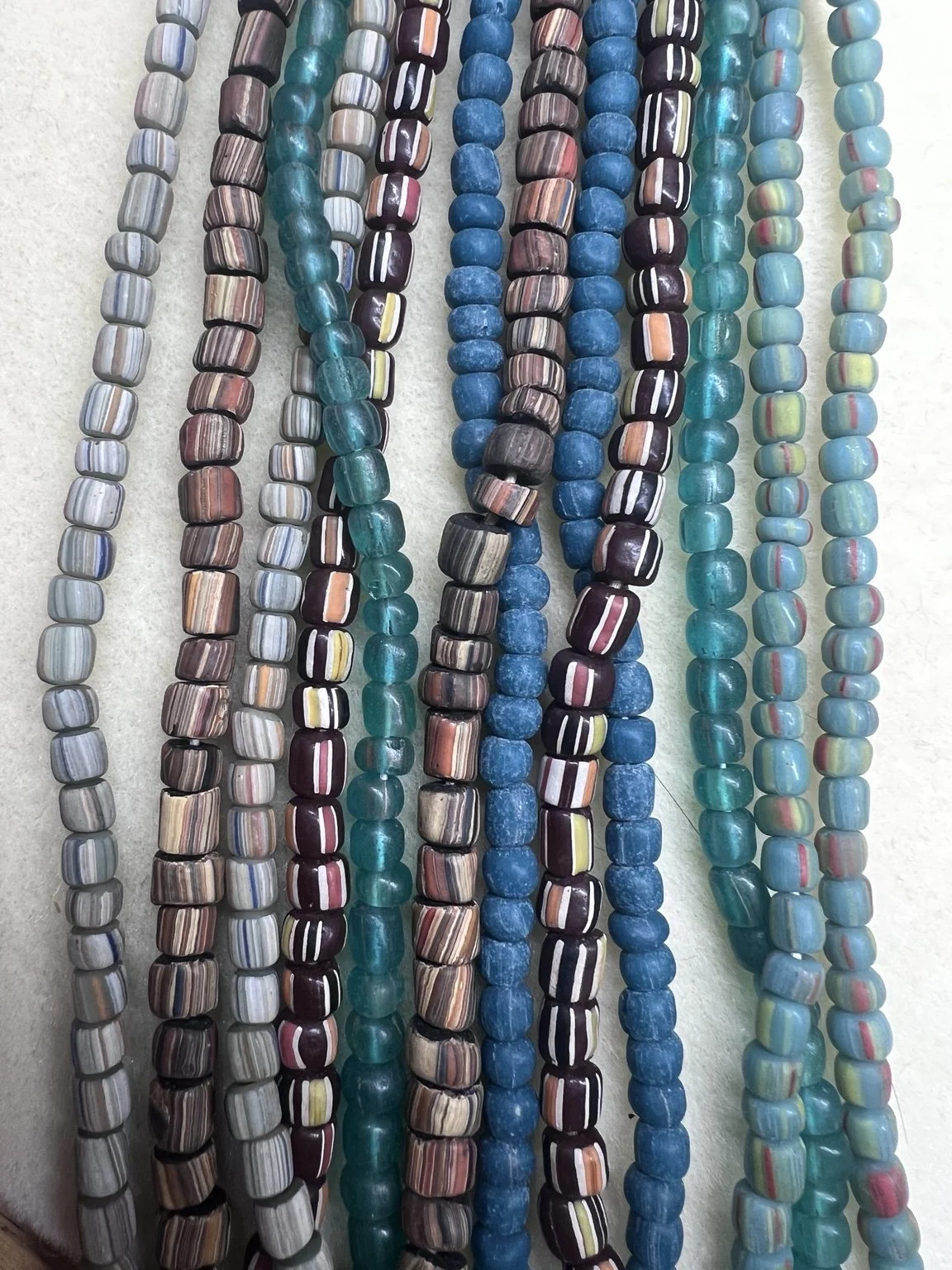
It can be very tempting to pick up an old-looking, wonderfully worn bead and immediately give it an equally wonderful history.
"This must be an antique African trade bead!"
Maybe.
But maybe not.
Age, manufacturing technique, country of origin and actual provenance can be surprisingly difficult to establish simply by looking at a bead.
Some beads being sold today are genuinely old.
Others are contemporary beads made using traditional techniques.
Some are reproductions inspired by historic designs.
And sometimes we simply don't know.
Even museum collections contain beads whose precise histories aren't completely documented.
I actually love that.
Because it means curiosity is perfectly acceptable.
Sometimes the most accurate thing we can say about a bead is:
“I don't know yet.”
And then we get to learn. ❤️
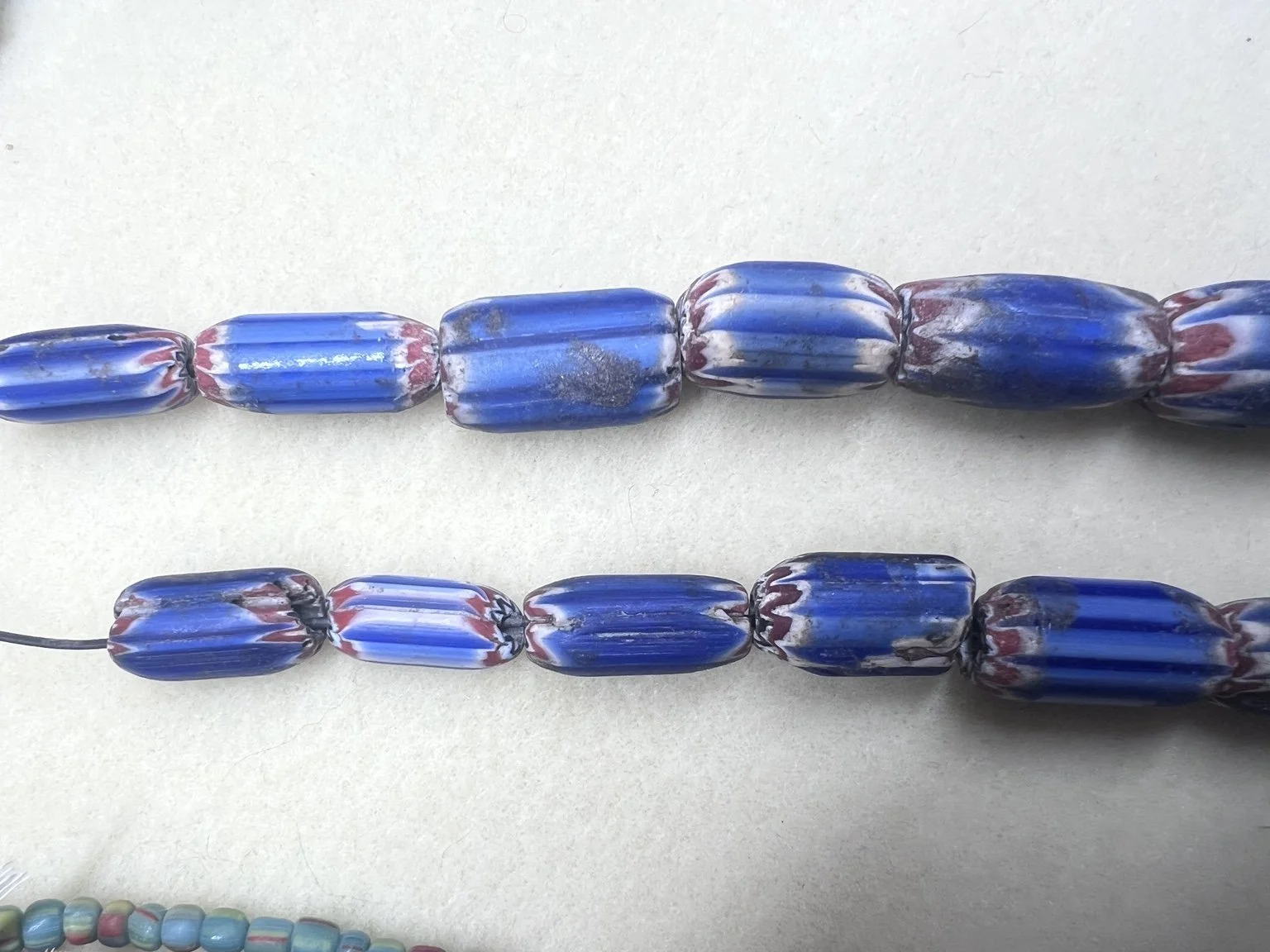
Beautiful? Absolutely. But appearance alone isn't enough to establish the age or complete history of a bead.
✨ Why These Beads Speak to Me
If you've been following Sun & Thread Sisters lately, you may have noticed that perfect doesn't interest me nearly as much as character does.
Give me variations.
Give me slightly uneven shapes.
Give me worn surfaces.
Give me colors that aren't perfectly identical.
Give me a bead that makes me wonder where it has been.
That's especially true when I'm doing bead embroidery.
I'll often spread beads around a piece and simply look at them for a while.
One color leads to another.
One texture changes the direction.
And sometimes one unusual bead suddenly becomes the thing around which the entire piece develops.
Knowing even a little about a bead's history changes the way I see it.
It stops being simply:
What can I make with this?
Instead I begin thinking:
What story am I adding to the one this bead already carries?
🌍 From Africa to the Bead Mat
That's one reason I'm looking forward to seeing what everyone creates for the Rocky Mountain Bead Society Mini Challenge.
An Africa-inspired theme gives us an opportunity to do more than simply reach for a particular color palette.
It gives us a reason to look deeper.
What traditions inspire us?
Where did a particular bead originate?
Who made it?
How was it made?
Is it old—or simply created in an older style?
What do we actually know about it?
And how can we be inspired by another culture thoughtfully and respectfully while still creating something that reflects our own artistic voice?
Those are questions I'm still learning to ask.
And I think asking them makes us better artists.
🧵 Every Bead Has a Beginning
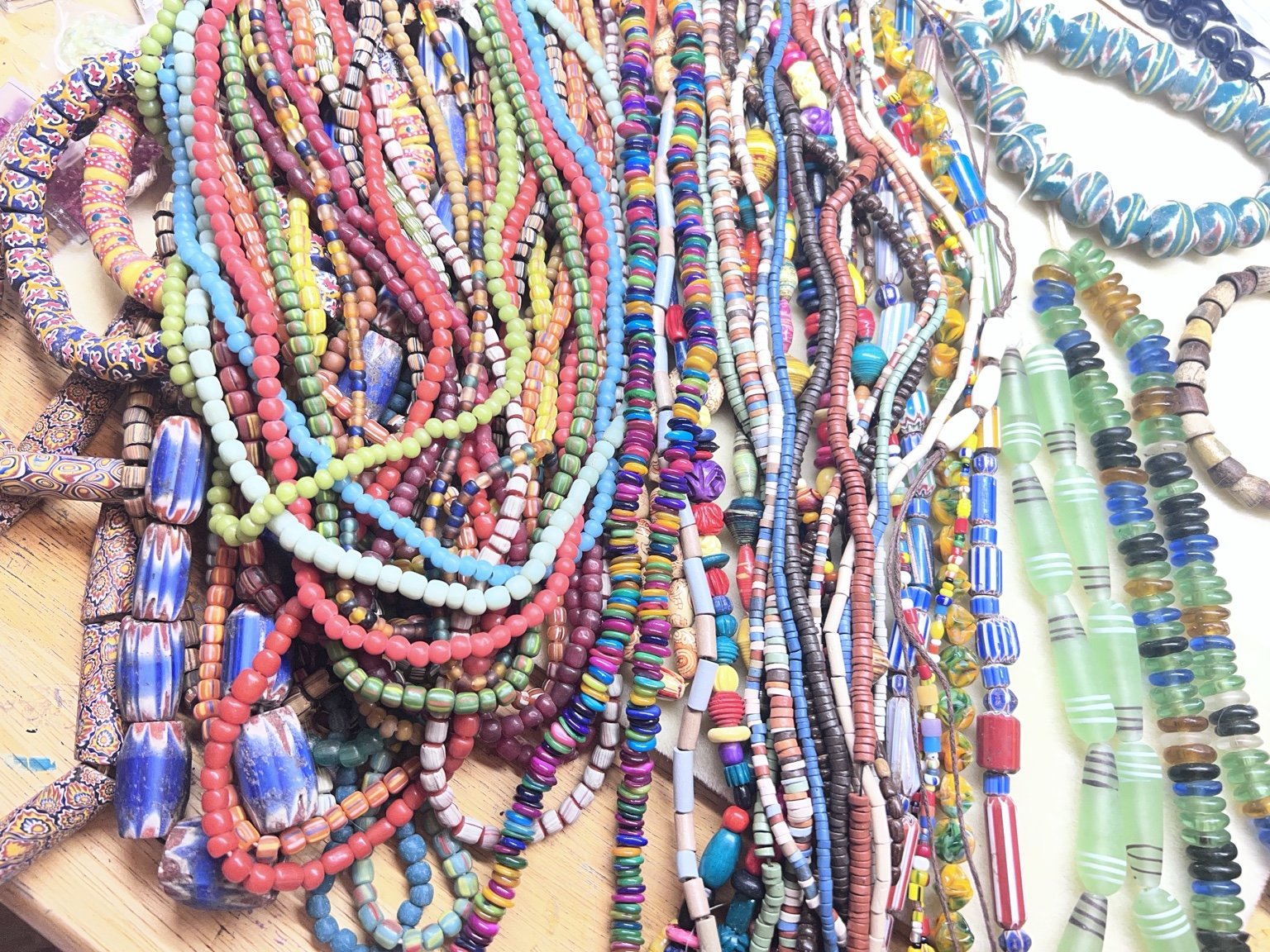
Looking at this gloriously tangled collection of beads on my table, I can't tell you the complete story of every one of them.
Some I know quite a bit about.
Some I know a little.
And some remain complete mysteries.
But perhaps that's part of their magic.
A bead can begin as sand, shell, stone, clay or glass.
It can pass through the hands of a maker.
Travel hundreds—or thousands—of miles.
Become meaningful to another person.
Be worn.
Traded.
Saved.
Collected.
Passed along.
And eventually land on another maker's bead mat, waiting to become part of something new.
Tiny objects. Enormous stories.
And this week, I think I'll spend a little more time listening to them. 🌍❤️
Until our threads cross again...
May your thread stay untangled, your needle easy to find, and your curiosity always lead you somewhere unexpected.
With gratitude,
Kristina & Kimberly
Sun & Thread Sisters
Nature Inspired • Heart Made • Sister Crafted.
🌿 A Little Further Down the Bead Trail
This Journal entry was inspired by the Rocky Mountain Bead Society Mini Challenge, my own bead collection, things I've learned along the way, and a little fresh research.
My interest became especially meaningful after hearing Melody MacDuffee speak about her experiences in Ghana and the work of Soul of Somanya.
If this story has made you curious too, museum collections are wonderful places to continue exploring, particularly the Smithsonian's National Museum of African Art and The Metropolitan Museum of Art.
And if you'd like to learn more about Melody MacDuffee and the artisans behind Soul of Somanya, you can visit Soul of Somanya.
Because apparently one bead rabbit hole is never quite enough. 😊