

Why Seed Bead Size Matters: Understanding 15/0, 11/0, 8/0 & More
Not all seed beads are created equal. Whether you’re new to bead weaving or expanding your skills, understanding seed bead sizes will help you choose the right materials, follow patterns with confidence, and bring your creative ideas to life. From handcrafted jewelry and wearable art to bead embroidery, ornaments, decorative art, mixed-media projects, and countless other beaded creations, choosing the right seed bead size is one of the beast foundations you can build.
Tiny Beads, Big Difference
One of the first things many new beaders notice is that seed beads come in a surprising variety of sizes. At first glance, they may all look similar, but once you begin creating jewelry, you'll quickly discover that bead size has a tremendous impact on the finished project.
The size of your seed beads influences everything—from the texture and flexibility of your design to the level of detail you can achieve. Choosing the right size can make a project easier to stitch, more durable, more visually balanced, and - when creating wearable pieces - more comfortable to wear.
Whether you're picking up a needle for the first time or adding another technique to your growing collection of skills, understanding seed bead sizes is one of the best foundations you can build.
What Do the Numbers Mean?
If you've ever wondered why seed beads are labeled 15/0, 11/0, 8/0, or 6/0, you're not alone. At first, the numbering system seems backwards.
The "/0" (pronounced aught) comes from an old sizing system. Originally, it referred to how many beads could fit side-by-side within a given length. The greater the number of beads that fit into that space, the smaller each individual bead had to be.
So, a 15/0 bead is smaller than an 11/0, while an 8/0 and 6/0 become progressively larger.
A Quick Reference Guide
The chart below highlights the four seed bead sizes you’ll encounter most often. Historically, seed beads have been produced in sizes ranging from approximately 24/0 to 1/0, although availability varies by manufacturer, country of origin, and time period. Because there is no single worldwide sizing standard, you may occasionally find slight difference between brands.
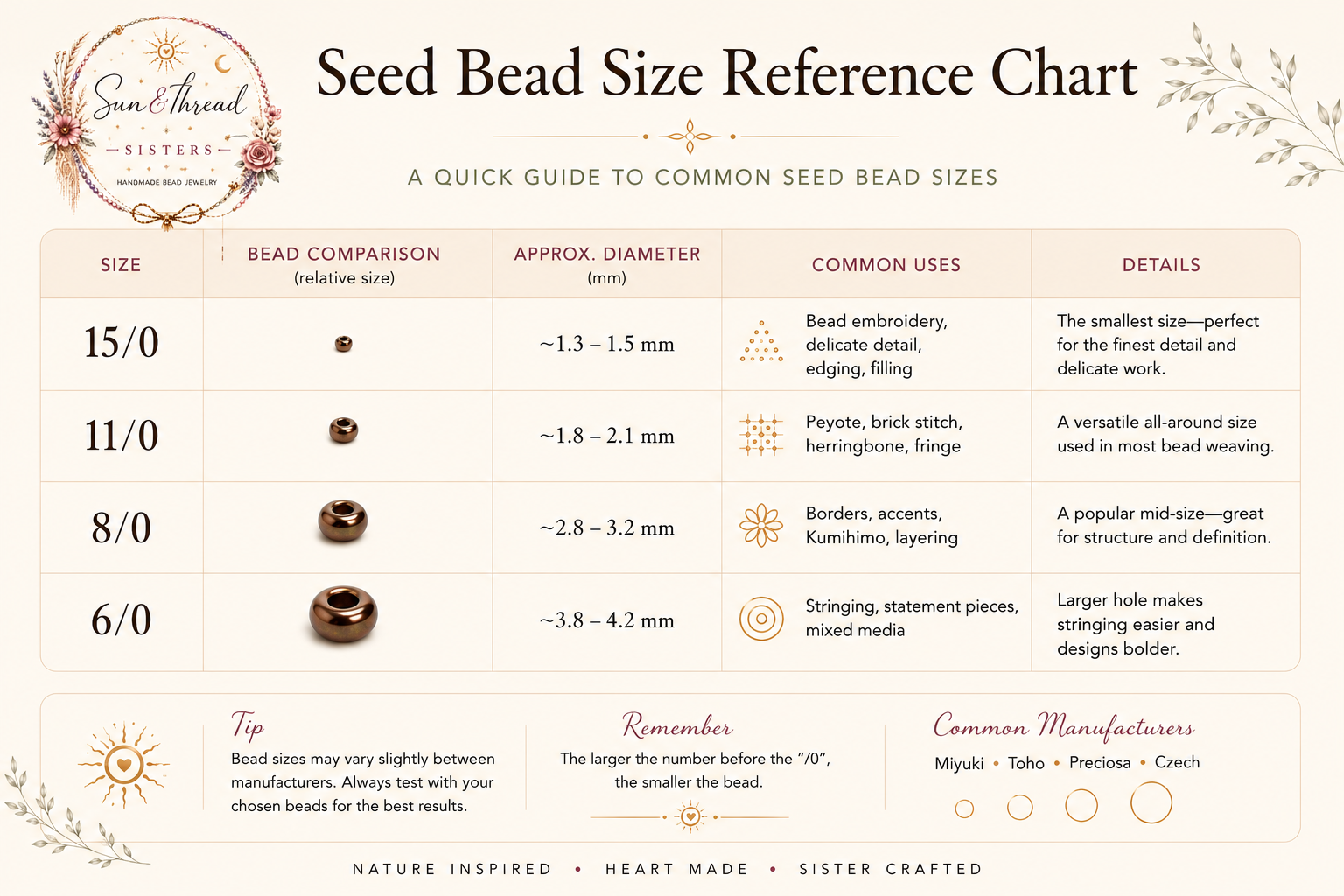
Sun & Thread Sisters seed bead size reference chart comparing 15/0, 11/0, 8/0, and 6/0 seed bead sizes with common uses and approximate diameters.
Although the historical sizing system isn't perfectly standardized today, these size numbers remain the universal language of seed beads used by bead artists around the world.
Did you know? Many bead artists begin with 11/0 seed beads because they’re the most versatile size available. As your skills grow, you’ll naturally add 15/0 beads for delicate work and 8/0 or 6/0 beads for texture and larger designs.
Getting to know the Most Common Seed Bead Sizes
15/0 Seed Beads
Tiny and delicate, 15/0 seed beads are perfect for adding fine detail. They're often used to create smooth bezels around cabochons, finish edges, fill small gaps, and add texture to bead embroidery or intricate bead weaving.
Because they are so small, they require patience, good lighting, and a steady hand. The reward is beautifully refined work with crisp, elegant details.
At Sun & Thread Sisters, I often use 15/0 seed beads when a design calls for precision or delicate finishing touches. Although they require a little more patience, these tiny beads can transform a good design into one with exceptional detail and refinement. In my Half Tila Basket Weave Bracelet Tutorial, I recommend Miyuki or Toho 15/0 seed beads for their consistency, beautiful finishes, and dependable quality.
11/0 Seed Beads
If there is one size that belongs in every bead artist's studio, it's the 11/0.
Often called the workhorse of bead weaving, 11/0 seed beads are one of the most versatile beads available. You'll find 11/0 seed beads used in countless techniques, including peyote stitch, brick stitch, herringbone, netting, right-angle weave, ladder stitch, and many more.
Both Miyuki and Toho manufacture excellent 11/0 seed beads, each offering outstanding quality and consistency that bead artists around the world have come to trust
8/0 Seed Beads
Larger than 11/0s, 8/0 seed beads create bold texture while remaining comfortable to work with, making them an excellent choice for beginners.
They're commonly used for decorative borders, stringing projects, Kumihimo, and designs where the beads themselves become part of the visual statement. Their larger holes also make multiple thread passes easier, making them especially forgiving for beginners and techniques that require reinforcing stitches.
6/0 Seed Beads
The largest of the commonly used seed bead sizes, 6/0 beads make a dramatic impression. They work beautifully in necklaces, bracelets, ornaments, mixed-media art, and decorative embellishments. They’re popular in fiber arts, ornaments, decorative home accents, and larger sculptural beadwork where bold texture becomes part of the design.
Combined with smaller seed beads, they add depth, texture, and visual contrast to a design.
As you continue exploring bead weaving, you’ll naturally discover that no single bead size is “better” than another. Each size serves a different purpose, and many of the most beautiful projects combine several sizes to create depth, texture, movement, and visual internest. Learning when to use each size is a part of the joy of growing as a bead artist.
Size Affects More Than Appearance
Choosing the right seed bead size isn't simply about making something bigger or smaller.
Smaller beads allow you to create delicate curves, intricate patterns, and refined finishes. Larger beads produce bold lines, stronger texture, and projects that often work up more quickly.
The same pattern stitched with 15/0 seed beads can look elegant and highly detailed, while the same design created with 8/0 beads may feel rustic, playful, or contemporary.
Understanding these differences gives you more creative freedom as an artist.
Why Consistency Matters
Not all seed beads are manufactured with the same precision.
Japanese manufacturers such as Miyuki and Toho are known throughout the beading community for producing remarkably consistent seed beads. Their precision makes them favorites among bead weavers, especially for techniques like peyote stitch, brick stitch, herringbone, and tapestry work where even tiny variations can affect the finished design.
Uniform bead sizes allow stitches to line up neatly, thread paths to remain even, and finished jewelry to drape beautifully.
Choosing high-quality beads often makes both the stitching experience and the finished piece noticeably better.
Personally, my favorite beads for precision bead weaving are Toho Aikos. Their exceptional consistency makes them my first choice for peyote stitch, brick stitch, loom weaving, and other techniques where perfectly uniform beads produce the cleanest results.
Building Your Collection
When you're just beginning your beading journey, it's easy to feel overwhelmed by the seemingly endless variety of colors, finishes, and sizes available.
The good news is—you don't need them all.
A small collection of quality 11/0 seed beads in several neutral colors will carry you through countless projects. As your skills grow, you can gradually add 15/0 seed beads for fine detail and 8/0 or 6/0 seed beads for bold texture and larger designs.
Building your collection slowly allows you to discover the colors, finishes, and styles that inspire you most.
My Favorite Starting Collection
If I were helping a new bead artist build their very first seed bead collection, I'd begin with quality 11/0 Miyuki seed beads in a few versatile colors such as silver-lined crystal, matte black, ivory, bronze, and gold.
From there, I'd add a handful of favorite colors that make you smile. As your confidence grows, begin adding 15/0 beads for fine detail and 8/0 beads for texture and accents.
There's no need to buy hundreds of colors all at once. A thoughtfully chosen collection will inspire far more creativity than an overflowing drawer of beads you've never used. Looking back, I wish I had started with quality beads from the very beginning rather than buying every color at a big box store, when they went on sale. I also learned to buy only for each project and what is needed to create it. Investing in quality beads and components has. helped me create better projects and enjoy the process even more.. As you collection grows, let your curiosity guide you. Every new color, finish, and bead size becomes another opportunity to experiment, learn, and develop your own creative style.
Every Bead Has a Purpose
One of the things I love most about bead weaving is that every tiny bead contributes to the final design. Individually they may seem insignificant, but together they create beautiful works of art filled with color, texture, and craftsmanship.
Understanding seed bead sizes isn't about memorizing numbers—it's about learning the language of beadwork and discovering how each size contributes to the finished design.
The more familiar you become with these sizes, the more confidently you'll choose materials, follow patterns, and create designs that reflect your own artistic vision.
Whether you're stitching your very first bracelet or your hundredth, every bead is another opportunity to learn, create, and enjoy the process.
Happy beading!
Kristina Amato
Sun & Thread Sisters
If you enjoyed this article, you may also like:
Meet the Tila Family: Understanding Tila, Half Tila & Quarter Tila Beads
Join us every Tuesday for a new Journal Entry filled with tips, tutorials, and inspiration. Is there a beading topic you’d like us to cover? We’d love to hear from you! Send us your ideas, and they may inspire a future Sun & Thread Sisters Journal Entry.